01
Club d’IA de l’Université Laval
Competition organizer. The format, rules and schedule are to be defined with the Club.

Competition vision · in development
Drone competition
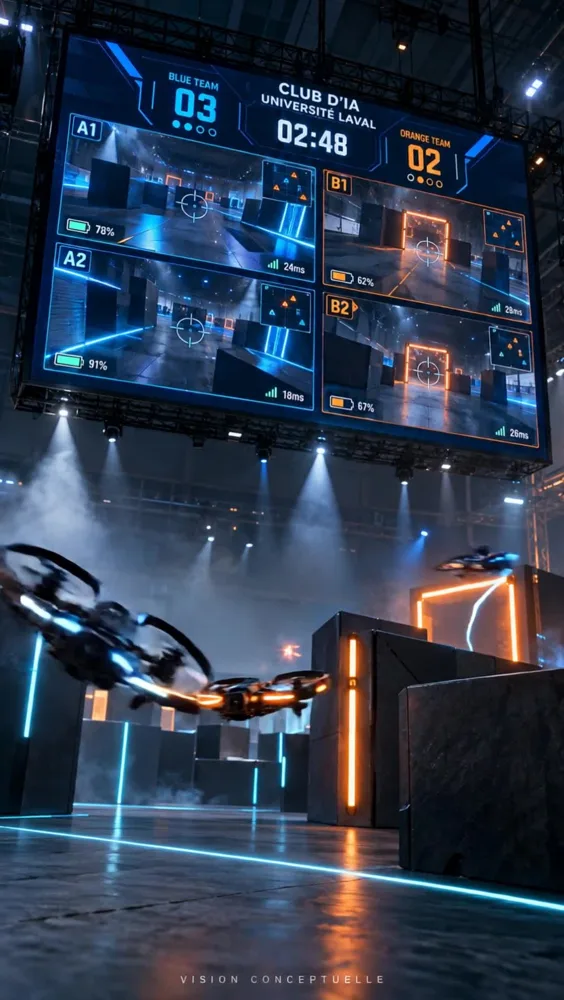
Drones facing off in an arena. Four onboard views. A giant screen to follow every strategy. Robotics meets esports.
 Organized byClub d’IA de l’Université LavalVisit the Club’s website ↗
Sponsorship being considered Okeiya

02 / Inside the arena
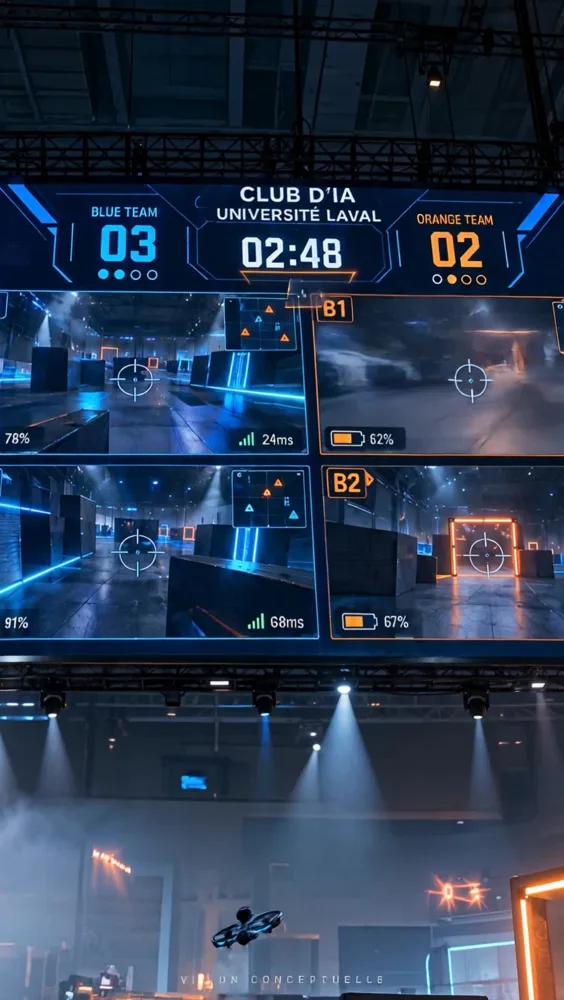
The giant screen brings onboard cameras, teams and scores together. An experience for players and spectators alike.
Match mockup · fictional data · no drone connection
 A1 / POV
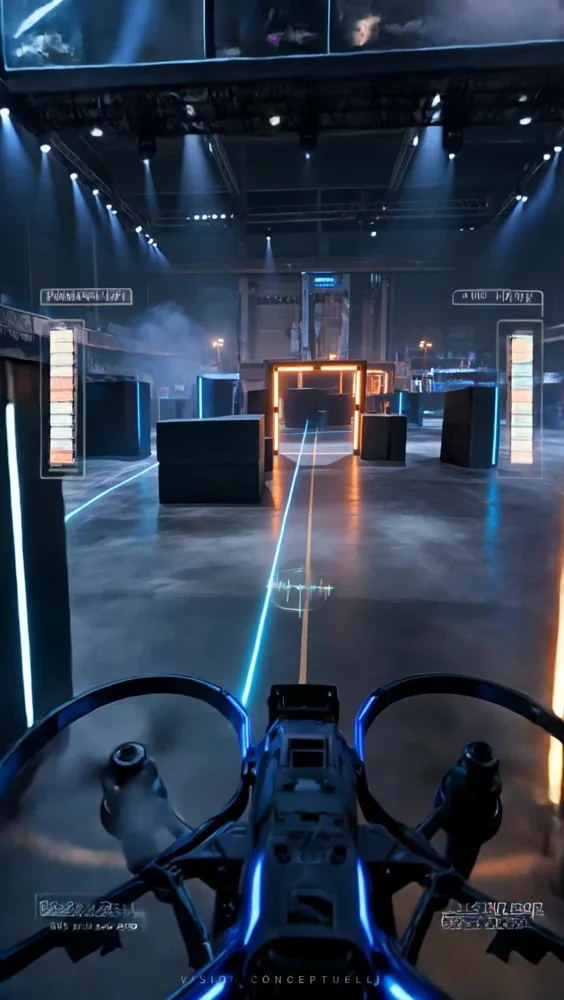 A2 / POV
 B1 / POV
 B2 / POV
4 views shown
03 / The Reel
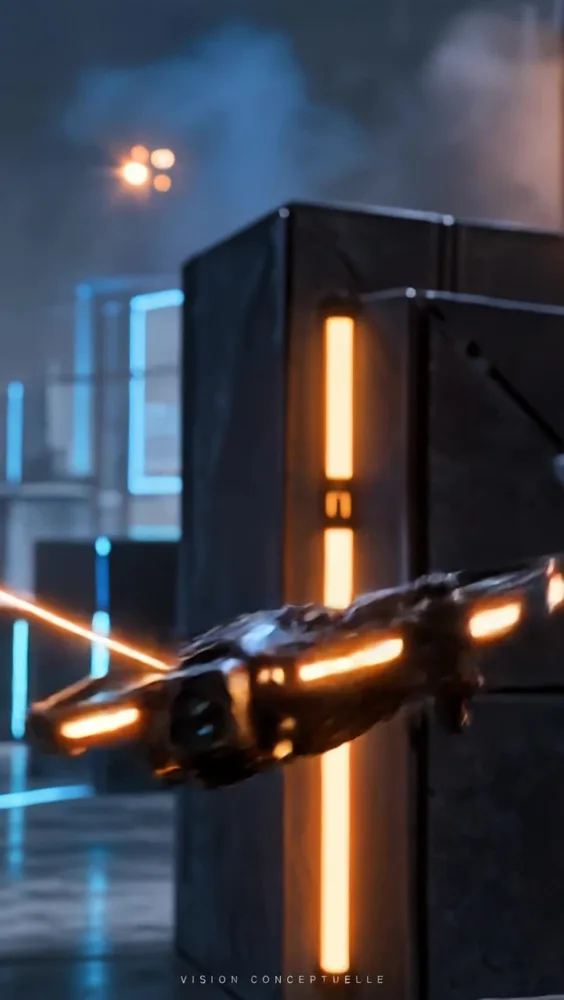
A 30-second concept film: drone duels, a laser tag arena and an esports-style giant screen. The Reel’s text is in French.
Concept illustration · this visual does not depict the actual prototype.
Blue and orange drones with protected propellers cross an indoor arena and exchange game beams. A suspended screen displays multiple viewpoints and a competition scoreboard. The vision names Club d’IA de l’Université Laval as organizer and Okeiya as a potential sponsor.
Concept film · 30 s
The concept
The vision: student teams developing drones that can move through a structured game environment. A challenge where perception, navigation and software come together.
01
Competition organizer. The format, rules and schedule are to be defined with the Club.
02
A sponsorship is being considered to support this student initiative. No sponsorship commitment is confirmed on this page.
The proposed prototype
These components describe directions being explored. Their implementation and performance are not confirmed on this page.
An experimental flying platform with perception and navigation functions under human oversight.
A controller with a built-in or mounted screen, bringing commands and useful information together.
A live view from the onboard camera; latency and image quality still need evaluation.
Flight and competition information presented in a way that remains readable during testing.
Raspberry Pi or another suitable solution, to explore for selected interface and processing functions.
The interuniversity vision
Eventually, different universities could form teams, develop their drones and explore strategies. The first step remains a working prototype to present.
Participating universities, the date and venue remain to be confirmed.
The technologies
Explore three proposed functions. This educational illustration receives no data from a drone.
Cameras and sensors could help a drone recognize its surroundings. Models and hardware remain to be chosen.
Perception could inform a flight path. Flight limits and tests still need to be defined.
An interface should let a person monitor useful information and intervene. Its operation must be tested.
Safety and responsibility
Autonomy is explored with human oversight. Testing, venues and game mechanisms need review with teams and the people responsible.
In Canada, requirements depend on the aircraft, location and operation. Transport Canada distinguishes indoor from outdoor flights: Part IX of the regulations does not apply indoors, but other laws and safe operation remain relevant. This distinction does not authorize a venue or demonstration.
Optical hardware requires its own assessment. Health Canada guidance does not establish that a game system is safe without knowing its components and operating conditions.
Read the official sources
Transport Canada — Where to fly a droneHealth Canada — Laser productsFollow the project
The steps below are goals, with no announced schedule or claim of completion.
Goal
Define the concept, team, needs and testing framework.
Goal
Assemble and develop a first experimental platform.
Goal
Evaluate functions and safety measures in a supervised setting.
Goal
Show what actually works, including its limits.
Goal
Share the concept and learn about other teams’ interest.
Goal
Define a format, rules and organizational requirements together.

Find people to build with
Represent an organization or want to support the initiative? Let’s discuss sponsorship possibilities and what Okeiya could contribute.
Discuss sponsorship with OkeiyaThis opens Okeiya’s contact page to discuss sponsorship. It does not register you for a team or competition.
Ideas that take flight. Students moving forward together.